A cross-border effort to close the dementia awareness gap
Dementia is rising worldwide – but awareness, access to care, and early diagnosis remain uneven, particularly among immigrant communities and in remote regions. A new European collaboration aims to change that.
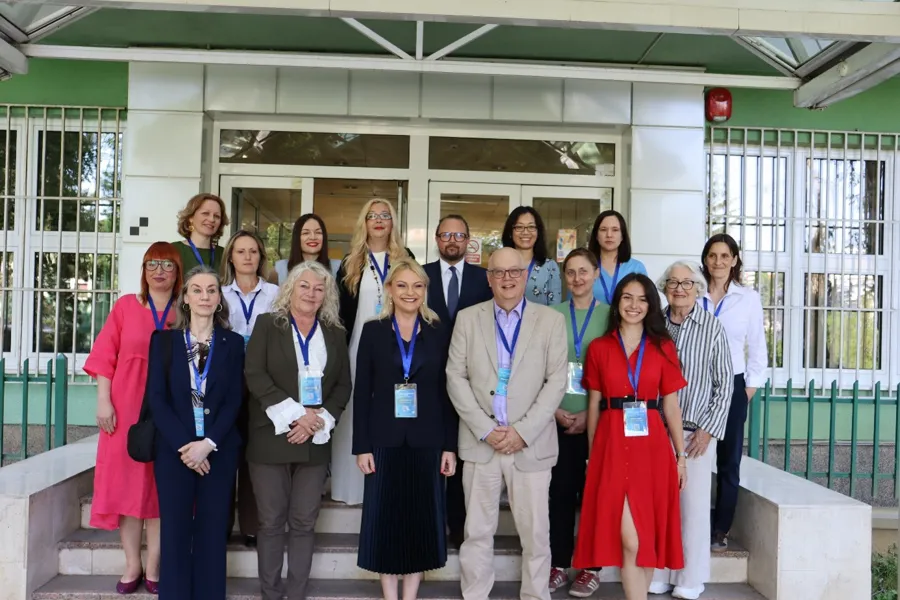
The ADawarE project, led by Norway in partnership with Austria, Greece, Croatia, and Bosnia and Herzegovina, has officially launched its work to strengthen dementia awareness among healthcare professionals and underserved populations. By combining research, training, and public outreach, the consortium seeks to bridge critical gaps in knowledge and access to dementia care.
At the heart of the project is a simple but urgent question: how can societies ensure that no one is left behind when it comes to understanding and managing dementia?
Building a shared vision in Sarajevo
The initiative began with a kick-off meeting at the University of Sarajevo, Faculty of Medicine, where partners gathered to set priorities and align their efforts. The meeting was arranged by Activity Lead Univ.Prof Asija Začiragić and opened by Dean Univ.Prof. Amina Valjevac, alongside representatives including Austrian Attache for Social Affairs Mag. Manuel Aigner.
Over two days, participants established a shared framework for the project – agreeing on goals, defining deliverables, and building trust across institutions and countries.
Presentations from project leaders, including Project Coordinator Univ.Prof. Ingelin Testad and Project Lead Univ.Prof. Stefanie Auer, highlighted the consortium’s ambition: to generate evidence on what works in dementia awareness campaigns and to translate that knowledge into practical tools and training.

From research to real-world impact
A key focus of ADawarE is understanding how dementia awareness efforts can better reach immigrant communities, particularly those living in areas with limited access to healthcare services.
To do this, the project will:
- Investigate how public awareness campaigns influence knowledge and attitudes toward dementia
- Identify and share successful campaign models across countries
- Develop training programs for healthcare professionals
- Engage directly with communities through both on-site and digital learning formats
By grounding research in real-world needs, the consortium aims to move beyond theory and deliver tangible improvements in care and inclusion.

Engaging the next generation
The Sarajevo meeting also extended beyond researchers and policymakers. On the second day, project partners delivered lectures to undergraduate students, sharing best practices in dementia awareness and prevention in their respective countries. Topics that were shared are:
- “Awareness of Dementia in Community Settings”, by Prof Ingelin Testad
- “Dementia Awareness Building in Austria”, by Prof Stefanie Auer
- “Loops of Awareness – How Knitting Helps Us Talk About Dementia”, by Prof Ninoslav Mimica and Sandra Kerovec
- “Non-Pharmacological Interventions in Mild Cognitive Impairment and Dementia – The Greek Paradigm”, by Marianna Tsatali
This engagement reflects a broader goal: building long-term capacity by equipping future healthcare professionals with the knowledge and skills to address dementia in diverse populations.
Learning from community-based care
The meeting concluded with a visit to the Healthy Aging Center in Sarajevo, offering participants a close look at community-based approaches to healthy ageing.
Centre manager Sejdefa Basic Hadziavdic introduced programs designed to support one of the country’s most vulnerable groups—the elderly—through social, cultural, and educational activities. These initiatives promote active living while reducing isolation, a factor increasingly recognized as contributing to cognitive decline.
The visit also featured a presentation by Norwegian patient and public involvement representative Anne Torsvik Henriksen, who introduced WiseAge, Center for Age-related Medicine SESAM’s platform for user-involvement in research and societal engagement at Stavanger University Hospital.
Across discussions, a shared message emerged: tackling dementia requires more than medical care. Social connection, community engagement, and awareness are equally essential.


A shared responsibility
As ADawarE moves forward, its success will depend on collaboration across borders and sectors. By combining research evidence with community insight, the project aims to create more inclusive and effective approaches to dementia awareness.
In doing so, it highlights a growing recognition across Europe: addressing dementia is not only a healthcare challenge – but a societal one.
