Dispatch suspicion of sepsis and time from emergency department arrival to antibiotic administration: a Norwegian registry study
The study has been published in the Scandinavian Journal of Trauma, Resuscitation and Emergency Medicine and investigates how Emergency Medical Communication Centres (EMCCs) assess patients who are subsequently diagnosed with sepsis.
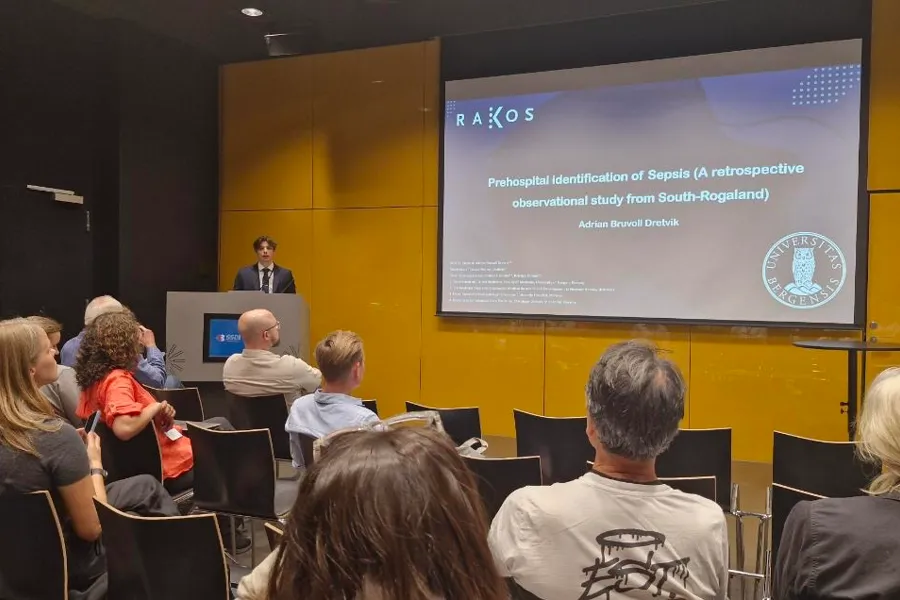
An important study conducted in the HS region. We investigated whether suspicion of sepsis during the very first contact with the Emergency Medical Communication Centre (EMCC) influences how quickly patients receive antibiotics after arriving at the hospital.
Only 27% of patients who were ultimately diagnosed with sepsis were identified as possible sepsis cases by the EMCC. However, these patients received antibiotics an average of 31 minutes earlier than patients for whom sepsis had not been suspected. They were also approximately three times more likely to receive antibiotics within one hour of arrival at the emergency department.
The findings suggest that early suspicion of sepsis by the EMCC may contribute to more rapid treatment and that improved identification and pre-notification of hospitals could represent important areas for improvement, although the study cannot establish a direct causal relationship.
This mirrors what has also been observed for suspected stroke: when the condition is recognized early and communicated before hospital arrival, patients receive faster treatment once they reach the hospital.
The article is available open access at the following link:
https://doi.org/10.1186/s13049-026-01730-1